

Numbness, Tingling & Sciatica After a Car Accident in Phoenix & Scottsdale
Intro
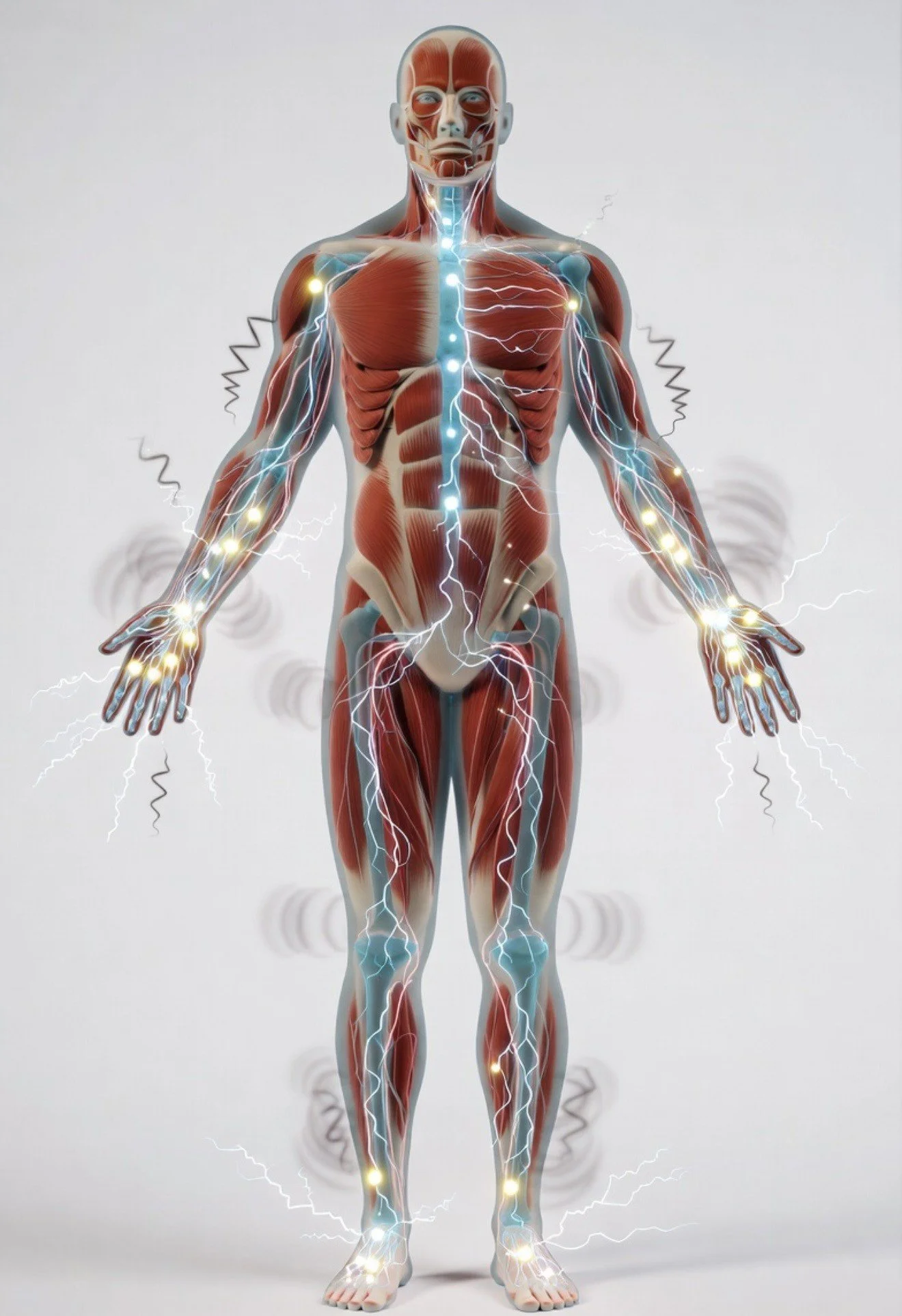
Numbness and tingling after a collision mean a nerve is involved. That's a different category from muscle pain and stiffness, and it deserves prompter attention than it usually gets.
Most cases resolve well with appropriate care. But a minority don't, and the ones that don't are largely the ones where evaluation was delayed.
Get seen now if you have any of these
Some symptoms shouldn't wait for a routine appointment:
Weakness that is worsening rather than staying constant
Numbness in the groin or inner thighs
Loss of bladder or bowel control
Numbness affecting both legs
Inability to lift the front of the foot when walking
These can indicate significant nerve compression requiring urgent evaluation. Go to an emergency department rather than waiting for an office visit.
What causes it
Nerves exit the spine through narrow openings. Anything that narrows that space further — a disc pushing backward, inflammation around a facet joint, swelling in surrounding tissue — puts pressure on the nerve root.
Collisions produce all three. Disc injury from compression and shear, inflammation from soft tissue trauma, and the swelling that follows both.
Nerves can also be injured along their course rather than at the root: brachial plexus traction from the arm being pulled at impact, or peripheral compression from seatbelt or airbag contact.
Reading the pattern
Nerve symptoms follow the anatomy, which makes them unusually informative.
Numbness in the thumb and index finger points to a different cervical level than numbness in the ring and little fingers. Pain down the back of the leg into the foot follows a different root than pain along the outer thigh. The distribution tells us where to look before any imaging is ordered.
Sciatica specifically refers to symptoms along the sciatic nerve — buttock, back of the thigh, calf, sometimes into the foot. It is a description of a pattern, not a diagnosis. Something is compressing or irritating that nerve, and identifying what is the actual clinical question.
Symptoms in this category
Numbness or tingling in the arms, hands, legs, or feet
Burning or electric pain shooting down a limb
Weakness in grip, or difficulty lifting the arm overhead
Foot drop, or catching the toe when walking
Symptoms worsened by coughing, sneezing, or straining
Symptoms that change with position — worse sitting, better standing, or the reverse
A limb that feels heavy or unreliable
Evaluation
Neurological complaints get a neurological examination — not a general assessment with a reflex check tacked on.
That means dermatomal sensory testing, myotomal strength testing, reflex assessment, and nerve tension testing to identify which root is involved. Combined with orthopedic and segmental findings, this localizes the problem to a level. Where findings indicate significant compression, or where symptoms are progressing, we order or review imaging without delay.
This is where having MD and DC evaluation in one practice matters most. Nerve involvement is the presentation most likely to require both conservative care and medical management, and the decision about which path to take should not depend on which office you happened to walk into.
Treatment
Treatment addresses what's compressing the nerve rather than the numbness itself.
Where disc involvement is the driver, care focuses on reducing compression and inflammation and restoring motion at the affected segment. Where inflammation dominates, that's addressed first. Where muscle guarding is contributing — piriformis involvement in sciatica is a genuine and frequently missed contributor — soft tissue work is central.
As symptoms improve, treatment shifts to restoring stability so the compression doesn't recur. Nerve symptoms that resolve without addressing the underlying mechanics have a habit of returning.
Recovery is monitored objectively. Sensation and strength are re-tested, not just asked about. A patient who says they feel better while their grip strength is unchanged needs a different plan.
Documentation
Neurological findings are the most objective evidence in an injury claim — sensory deficits and strength loss are measured, not reported.
That makes careful documentation especially valuable here. We record court-ready findings with objective neurological testing and appropriate ICD-10 coding, tracked across the course of care so progression or resolution is on the record.
Cost
If the accident wasn't your fault, you may have no out-of-pocket cost. We accept auto insurance and treat on personal injury lien.
Don't wait on nerve symptoms
Numbness and tingling after a crash should be evaluated early. Outcomes are better and the record is stronger.
Call (480) 991-3399 or book online.